
EU Commissioner for Fisheries Maria Damanaki has indicated that she aims to draw up a new fisheries protocol “in line with the position expressed by the EU Council and the vote in the European Parliament”.
The European Parliament voted down the one-year extension of the previous protocol on 14 December, over legal, environmental and economical concerns. The Parliament’s legal services had concluded that the agreement was in violation with international law, since Western Sahara is not part of Morocco, and the people of the territory have never approved the fisheries. In addition, an external evaluation report showed that the agreement was a complete waste of EU’s taxpayers money, and contributed to destruction of marine life offshore Western Sahara.
Commissioner Damanaki states that the new agreement will include legal, environmental and economical guarantees to accommodate Parliament’s and Council’s concerns. The Commissioner proposes that Morocco should comply with international law by reporting regularly on its use of EU funds for the population concerned, including the people of Western Sahara.
According to the UN Legal Opinion of 2002, economic activities in Western Sahara can only be considered lawful if the Saharawi people are consulted, consent to and benefit from those activities. Yet again, the European Commission does not exhibit any interest in the Saharawi people’s wishes.
The Commissioner has already resumed informal contacts with Rabat.
Spain pushing for new agreement
 Spain has been advocating a new protocol with Morocco relentlessly. Under the previous protocol, the country received no less than 100 of 119 available fishing licenses. The Parliament’s veto in December resulted in 64 Spanish ships, mainly from Andalusia and Canary Islands, having to leave Saharan and Moroccan waters.
 Almost immediately after taking office, the newly appointed Spanish Fisheries Minister, Miguel Arias Cañete, met with EU Commissioner Damanaki to urge her to strike a deal with Morocco as quickly as possible. Cañete also thinks the European Union should compensate Spain for losing fishing possibilities in Morocco – a cost he estimates at around 15 to 16 million Euro.
The Spanish Minister avoids all questions about Western Sahara, Spain's former colony. He has stated that he expects the EU to be flexible enough to allow Morocco to accept a deal as quickly as possible. Cañete warned that "the Spanish government will not spare any effort to ensure that the accidents that have occurred in European Parliament will not be repeated."

Heidelberg Materials deepens its role in Morocco’s occupation of Western Sahara
The German company confirms once again that its operations in occupied Western Sahara are closely tied to Morocco’s infrastructure expansion in the territory - while continuing to dismiss the Saharawi people’s right to consent.

The conflict phosphates - four decades of plunder
For over 40 years, a Moroccan state-owned company has exported phosphate rock from occupied Western Sahara.
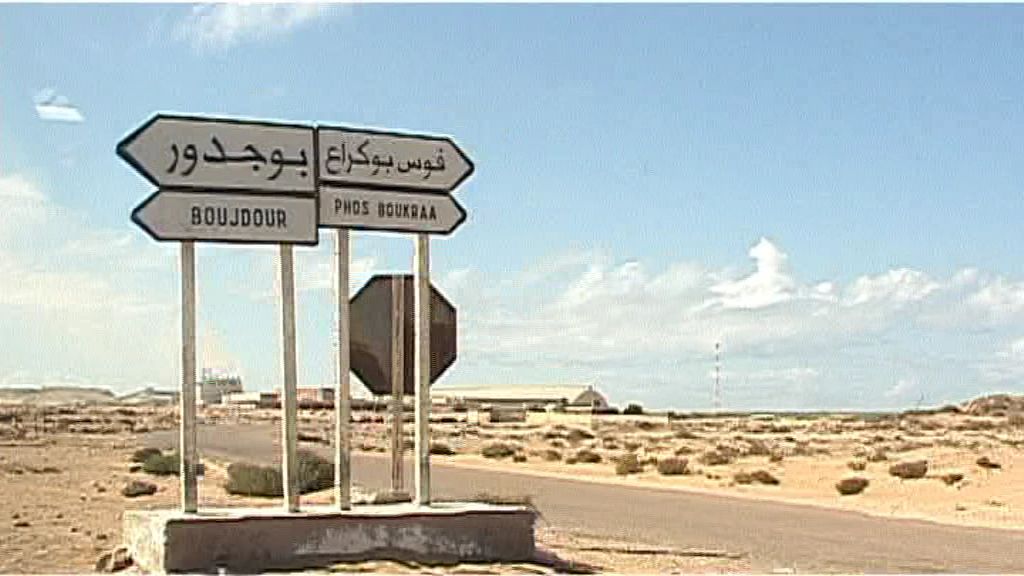
Record low number of importers of Western Sahara phosphates
Only three companies imported phosphate rock from occupied Western Sahara in 2025 - the lowest number ever recorded. The findings appear in our annual P for Plunder report, released today.

One of the richest coastlines in the world
The fish stocks of occupied Western Sahara have not only attracted the interest of the Moroccan fleet: other foreign interests are also fishing in the occupied waters through arrangements with Moroccan counterparts. Along the Western Saharan coastline, a processing industry has emerged.