
Last Friday, Morocco announced its willingness to engage in a new fisheries agreement with the European Union. "The talks must respect international law, and should be immediately halted until the Saharawi have given its consent", stated WSRW.
After a meeting with the Moroccan vice-Minister for Foreign Affairs, Mr. Yousef Amrani, EU Fisheries Commissioner Maria Damanaki stated in a press conference that they had discussed “the possibilities of concluding a new agreement”, which in all events should “respect the environment, take into consideration the resources of Morocco and be beneficial to both parties”. Minister Amrani declared his country’s interest to explore new fishing opportunities that are to the benefit of both parties.
However, it seems that the talks are already taking place in violation of international law. Both the United Nations and the European Parliament have stated that the Saharawi people must express its consent in relation to such activities.
"The fact that the EU engages in talks with Morocco without first obtaining the consent from the Saharawi, show that they have not learnt from previous mistakes. We call on the EU to halt discussions with Morocco until the Saharawis’ voice has been heard" stated Sara Eyckmans, coordinator of WSRW.
The Parliament legal service stated clearly that international law does not prevent as such undertaking activities related to the natural resources in a Western Sahara, “but only insofar as those activities are carried out in disregard of the interests and of the wishes of the people of that territory”.
Damanaki’s visit to Morocco had not been officially announced in advance.
The official press release by the European Commission communicating the Commissioner’s trip, states that:
"The European Commission considers Morocco to be a key partner, not only in the Mediterranean, but in general. I asked the Commission and the Council to give me a mandate to discuss the new fisheries agreement protocol and I obtained it: we are seeking a new agreement that, at the same time, respects environmental sustainability, is profitable for both sides and is in line with international law. I believe that today we have done a very good start and we should continue along this path. For the EU and Morocco, cooperation is not a choice: it is a must. We have to cooperate if we are to manage fish stocks effectively. I am glad to say that we started today our exploratory talks for a new fisheries agreement protocol with Morocco."
The one-year extension of the previous EU-Morocco fisheries deal was voted down by the European Parliament on 14 December 2012, causing wrath with both Morocco and the Spanish fishing industry – the primary beneficial of the fishing licenses under the agreement.
The majority of fishing practices under the agreement took place in the waters of Western Sahara, largely occupied by Morocco since 1975. An independent study on behalf of the European Commission in 2011, concluded that most stocks in Morocco and Western Sahara are either fully or over-exploited.

Heidelberg Materials deepens its role in Morocco’s occupation of Western Sahara
The German company confirms once again that its operations in occupied Western Sahara are closely tied to Morocco’s infrastructure expansion in the territory - while continuing to dismiss the Saharawi people’s right to consent.

The conflict phosphates - four decades of plunder
For over 40 years, a Moroccan state-owned company has exported phosphate rock from occupied Western Sahara.
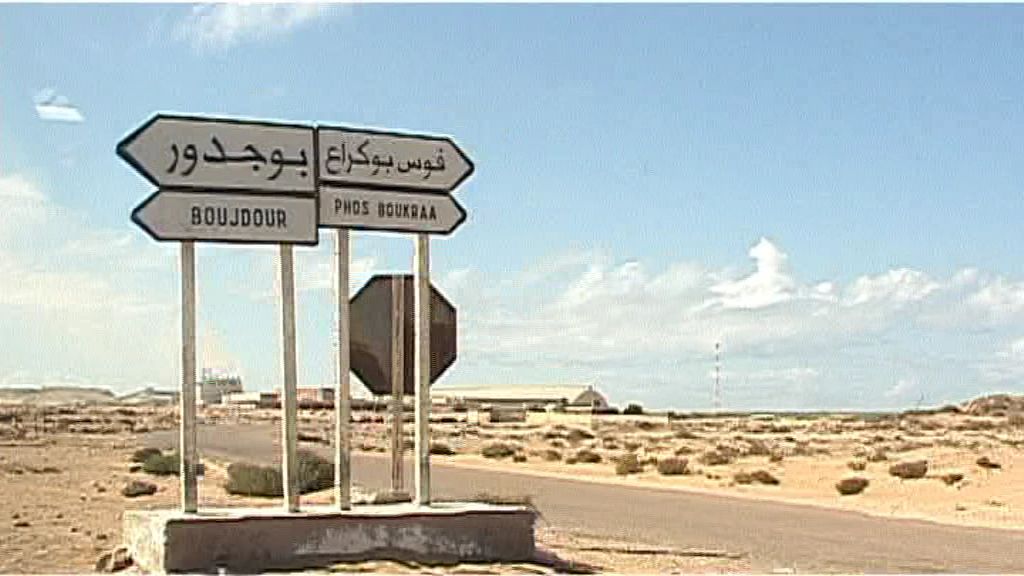
Record low number of importers of Western Sahara phosphates
Only three companies imported phosphate rock from occupied Western Sahara in 2025 - the lowest number ever recorded. The findings appear in our annual P for Plunder report, released today.

One of the richest coastlines in the world
The fish stocks of occupied Western Sahara have not only attracted the interest of the Moroccan fleet: other foreign interests are also fishing in the occupied waters through arrangements with Moroccan counterparts. Along the Western Saharan coastline, a processing industry has emerged.