
Today, the European Parliament’s agricultural committee issued its opinion that Parliament should refuse its consent to the conclusion of the agricultural agreement with Morocco. “The issue of the Western Sahara territories, with regard to which Parliament's legal services have been asked for an opinion, calls for careful assessment”, states the Committee’s report.
The proposed EU-Morocco agreement concerning reciprocal liberalisation measures on agricultural and fisheries products, will allow Morocco to immediately liberalise 45% of imports from the European Union while the Community will liberalise 55% of its imports from Morocco. The proposed agreement also contains increased concessions in the fruit and vegetable sector, in which Moroccan products account for 80% of the EU's imports.
This agreement, which was signed by the European Member States on 13 December 2010, still requires the European Parliament’s consent. But for months on end, Parliament’s endorsement process has been frozen because of the issue of Western Sahara.
As Western Sahara Resource Watch has noted, the agricultural sector in occupied Western Sahara has grown tremendously in the last few years. Thousands of Moroccan settlers have moved into the territory to work on the rising number of fruit and vegetable plantations. Morocco’s recent agricultural commitment is part of its strategy to settle the Non-Self Governing Territory - or colony - of Western Sahara, largely occupied by Morocco since 1975.
Today, Parliament’s committee for Agriculture and Rural Development decided to issue an opinion, drafted by MEP Lorenzo Fontana, proposing that “Parliament refuse its consent to the conclusion of the agreement”. Read the opinion here.
“The issue of the Western Sahara territories, with regard to which Parliament's legal services have been asked for an opinion, calls for careful assessment. Regardless of whether or not the territories can be included in the agreement, there continues to be a problem with human rights, which are systematically infringed. In order to protect such rights in full, the EU could consider using arguments of an economic and commercial nature, making the signing of such agreements subject to the genuine respect of human rights”, rapporteur Fontana’s report reads.
The Committee also appears receptive of concerns raised by European agricultural associations that the agreement would have “negative economic repercussions on regions which specialise in vegetable cultivation”. Additionally, it has doubts on the sanitary, phytosanitary and environmental differences between the Community and Morocco, and laments the lack of the necessary social and anti-dumping clauses in the agreement’s text.
In 2007, the European Anti-Fraud Office (OLAF) issued a report warning about irregularities in the import tomatoes from Morocco to the Union, indicating fraud by circumventing EU quotas. This potential pitfall has not been addressed by the Commission in the agreement currently under revision.
The part of Western Sahara where the Moroccan tomato industry is taking place is located in a part which Morocco annexed in 1979. “The General Assembly deplores greatly the deterioration of the situation after Western Sahara continues to be occupied by Morocco and that the occupation has been expanded", the UN General Assembly stated regarding that part of Western Sahara.

Heidelberg Materials deepens its role in Morocco’s occupation of Western Sahara
The German company confirms once again that its operations in occupied Western Sahara are closely tied to Morocco’s infrastructure expansion in the territory - while continuing to dismiss the Saharawi people’s right to consent.

The conflict phosphates - four decades of plunder
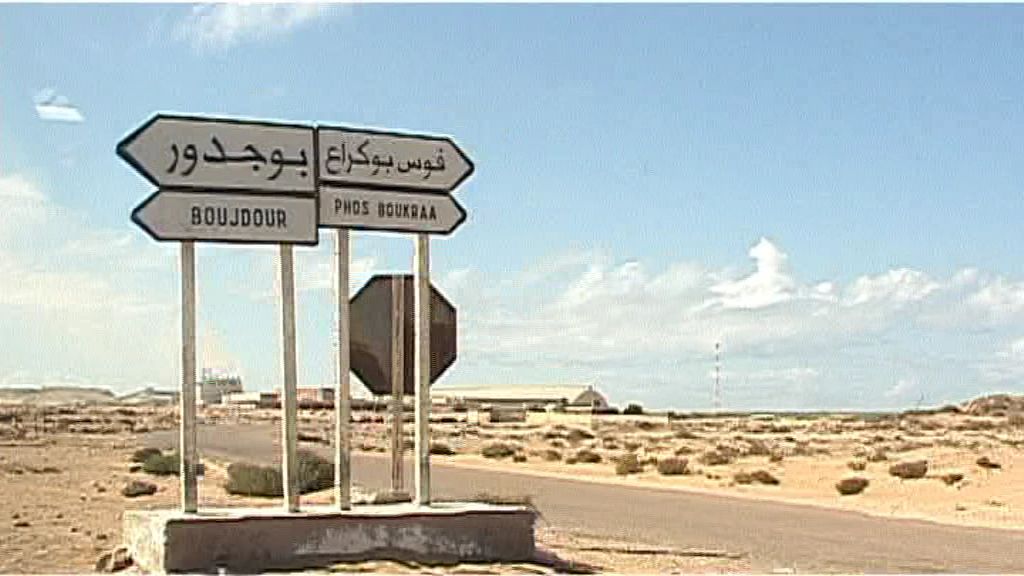
For over 40 years, a Moroccan state-owned company has exported phosphate rock from occupied Western Sahara.
Record low number of importers of Western Sahara phosphates
Only three companies imported phosphate rock from occupied Western Sahara in 2025 - the lowest number ever recorded. The findings appear in our annual P for Plunder report, released today.

One of the richest coastlines in the world
The fish stocks of occupied Western Sahara have not only attracted the interest of the Moroccan fleet: other foreign interests are also fishing in the occupied waters through arrangements with Moroccan counterparts. Along the Western Saharan coastline, a processing industry has emerged.