At the UN Fourth Committee on Decolonization held in New York on 6-12 October, WSRW called for the United Nations to send a Mission of Observation to Western Sahara, to monitor the natural resource exploitation from the territory.
International coordinator of Western Sahara Resource Watch, Cate Lewis, last week asked the UN decolonisation committee to monitor the natural resource exploitation from Western Sahara, and to determine whether the plunder is taking place in accordance with the wishes and interests of the Saharawi people.
See the WSRW speech below.
Petition
on Western Sahara to the IVth UN Special Political and Decolonization Committee
from Western Sahara Resource Watch
& on behalf of the Australia Western Sahara Association
Cate Lewis
October 2009
Mr Chairman
Western Sahara Resource Watch thanks you for the opportunity to speak before the United Nations IV Committee on Decolonization on the subject of protecting the natural resources of Western Sahara for the Saharawi people.
Our organization includes Saharawi members and represents individuals and organizations in over 30 countries around the world. Our aim is to research what is happening with the resources in that part of Western Sahara under Moroccan control and to protect them against exploitation by anyone other than the Saharawis themselves after a vote of self-determination.
It is our belief that it’s the United Nations which should be protecting these resources in a concrete and practical way for the Saharawi people instead of standing by as they are sold for Morocco’s gain.
The former UN legal counsel in a legal opinion for the Security Council in 2002 makes clear that the exploitation of these resources requires both the consent of the Saharawi people and it must also be to their benefit. Neither proviso is satisfied as things stand today.
In an important law conference in December 2008 hosted by the South African Department of Foreign Affairs and the University of Pretoria, the author of the UN opinion, Hans Corell, clarified this analysis, spelling out unequivocally that Morocco should be holding the natural resources of Western Sahara in trust for the people until such time as they can determine their own affairs. See: http://www.havc.se/res/SelectedMaterial/20081205pretoriawesternsahara1.pdf
http://www.wsrw.org/index.php?parse_news=single&cat=111&art=977
The situation is very clear in law, yet the plunder takes place every day with impunity, in a number of industries:
Phosphate
Phosphate mined in the territory is sold at great profit for the Moroccan state company, OCP without any benefit for the Saharawi people. Indeed, since Morocco took over the industry many Saharawi workers have lost their jobs and their rights under their Spanish contracts to compensation and a pension. Saharawis see no improvement in living conditions flowing from this lucrative trade.
The price of phosphate rose steeply in 2008. We estimate that the value of the phosphate filling one large bulk carrier is equivalent to the entire multilateral humanitarian aid going to the Saharawi refugee camps each year. And 100 phosphate vessels depart occupied Western Sahara annually.
The Australia Western Sahara Association finds it particularly troubling that three Australian fertiliser companies are importing phosphate mined in Western Sahara. Ethically minded investors in Sweden and Norway have blacklisted two of the Australian companies involved: Wesfarmers and Incitec Pivot. Insurance companies, banks and pension funds have divested their portfolios of shares in the two firms, on account of the unethical trade. They do not wish to give legitimacy to an occupying power, or impede the peace process.
Fish
Far from protecting the natural resources of its former colony, Spain participates in the pillage of its rich fishing grounds. In addition to the tonnes of fish taken from the coastal waters of Western Sahara, foreign companies have built factories onshore to process the fish by deep freezing, canning or making fish meal.
In the past year the Saharawi Republic declared its maritime boundaries, making any activity in these offshore zones a clear violation of Saharawi rights to maritime space. This places a new perspective on fishing and offshore oil exploration.
Sand
Beaches and the building industry in the Canary Islands both benefit from sand exported from Western Sahara, also the island of Madeira. This was pointed out by France Libertés – Fondation Danielle Mitterrand in its submission to the UN Human Rights Council in Geneva in March 2009.
Water
Fossil water is another finite resource, which is being depleted by horticultural projects near Dakhla for such produce as tomatoes, cucumbers and melons. The fruit and vegetables are sold in Europe mainly by French firms.
A Norwegian supermarket chain stopped importing tomatoes grown in Western Sahara in March when it became aware of how the unethical trade undermines the UN peace process. But the export continues to the EU, USA and Canada.
Oil
Companies from Ireland and the USA have concluded contracts with the Moroccan oil company ONHYM to explore areas, which include occupied Saharawi territories. This should stop.
Other minerals
Exploration continues for other precious metals and minerals, in violation of Hans Corell’s legal opinion of 2002.
Conclusion
We call on the Fourth Committee to reaffirm the permanent sovereignty of peoples over their natural resources in order to protect them in Western Sahara as the UN did in the case of Namibia in the 1980s prior to its gaining independence from South Africa in 1990.
Western Sahara Resource Watch believes that the United Nations mission to Western Sahara should be empowered to carry out its duty to protect the natural resources of the territory from exploitation by the occupying power, Morocco.
As a first practical step, we suggest the UN should send a mission of observation to the territory to report on the extent of Morocco’s exploitation of the natural resources of Western Sahara and whether it is taking place in accordance with the wishes and interests of the Saharawi people.
Thank you, Mr Chairman.

WSRW calls on addressing plunder
WSRW calls on UN Member States to address Morocco's plunder of Western Sahara during Morocco's UPR review in November.
WSRW calls upon UN to halt the plundering
In its statement to the United Nations’ Special Political and Decolonization Committee (Fourth Committee), Western Sahara Resource Watch called for the establishment of a mechanism to place the proceeds from the exploitation of Western Sahara’s natural resources under international administration until the conflict has been resolved, and for the inclusion of a human rights component into the MINURSO mandate.
States urge Spain to respect Saharawi rights in Human Rights Council
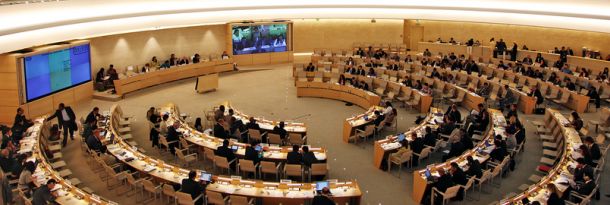
Namibia and East-Timor have today recommended Spain to respect the Saharawi people's right to free, prior and informed consent with regard to the exploitation of Western Sahara's natural resources.
WSRW calls on UN Members to question Spain on Western Sahara at UPR
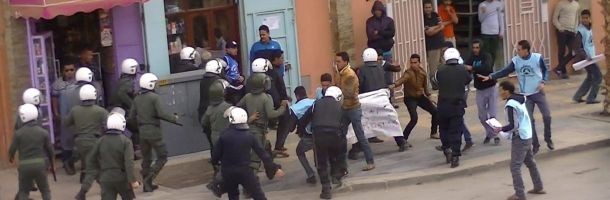
Next month, Spain’s human rights track record will be reviewed by the UN Human Rights Council in Geneva. WSRW asks UN Member States to raise the rights of the people of Western Sahara, for whom Spain continues to bear responsibility.